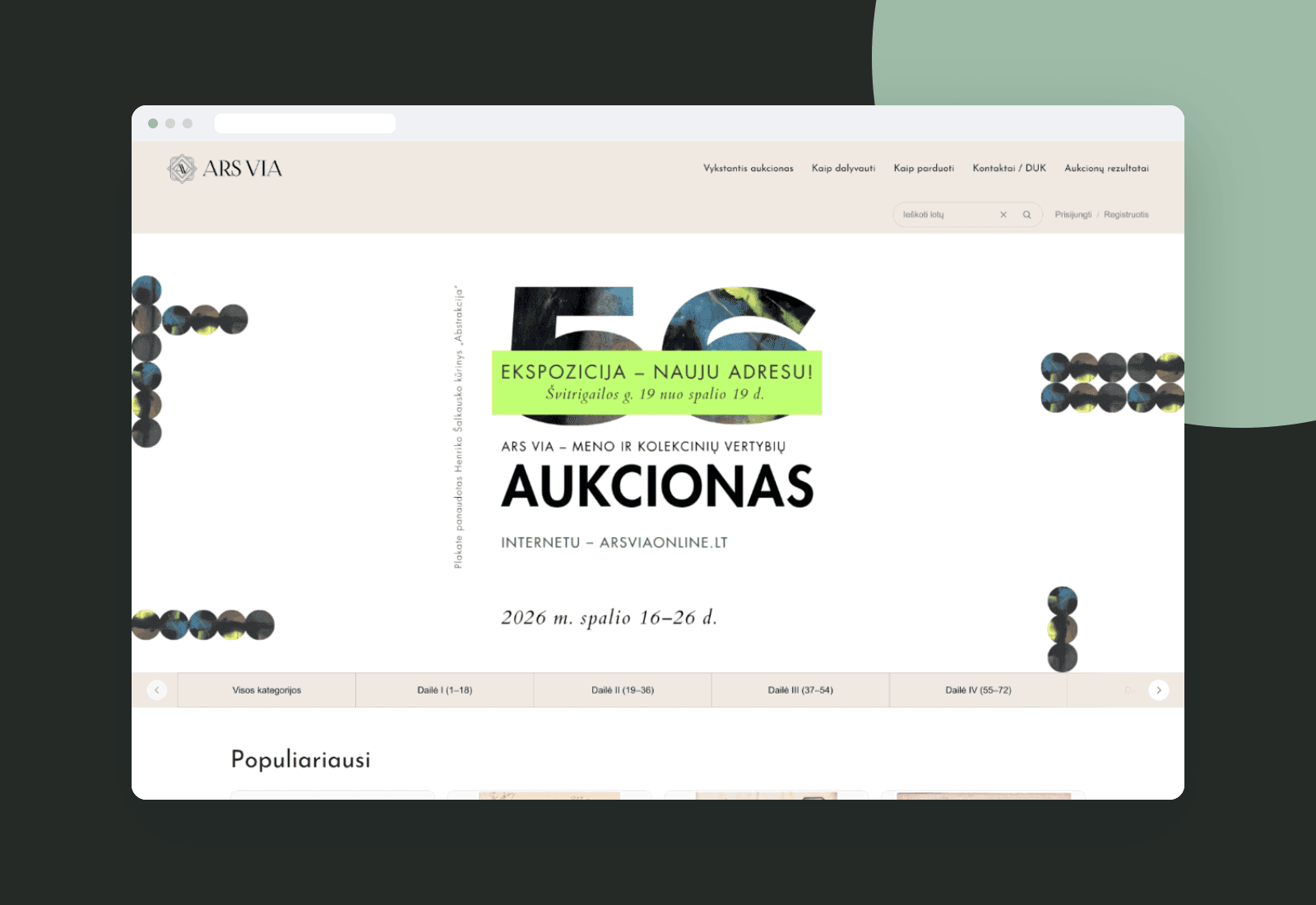
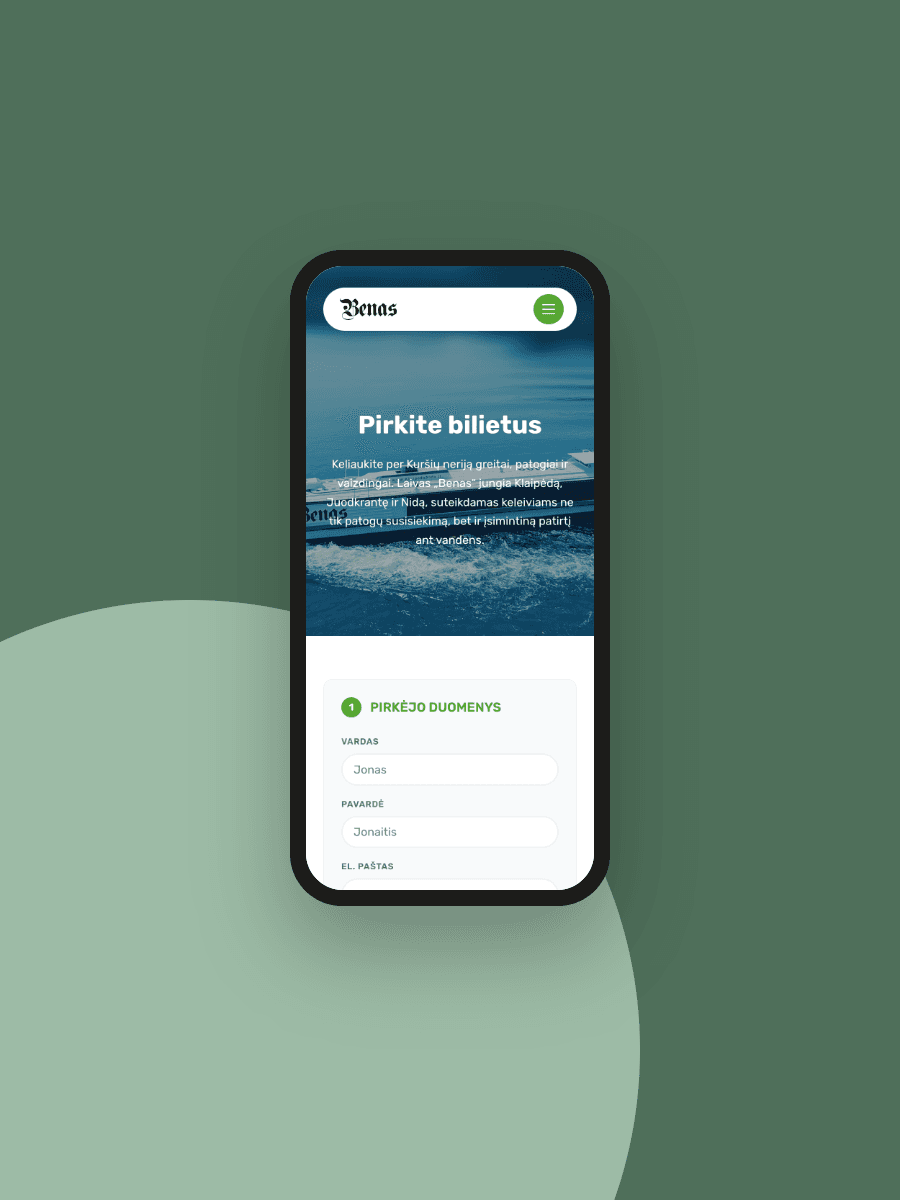
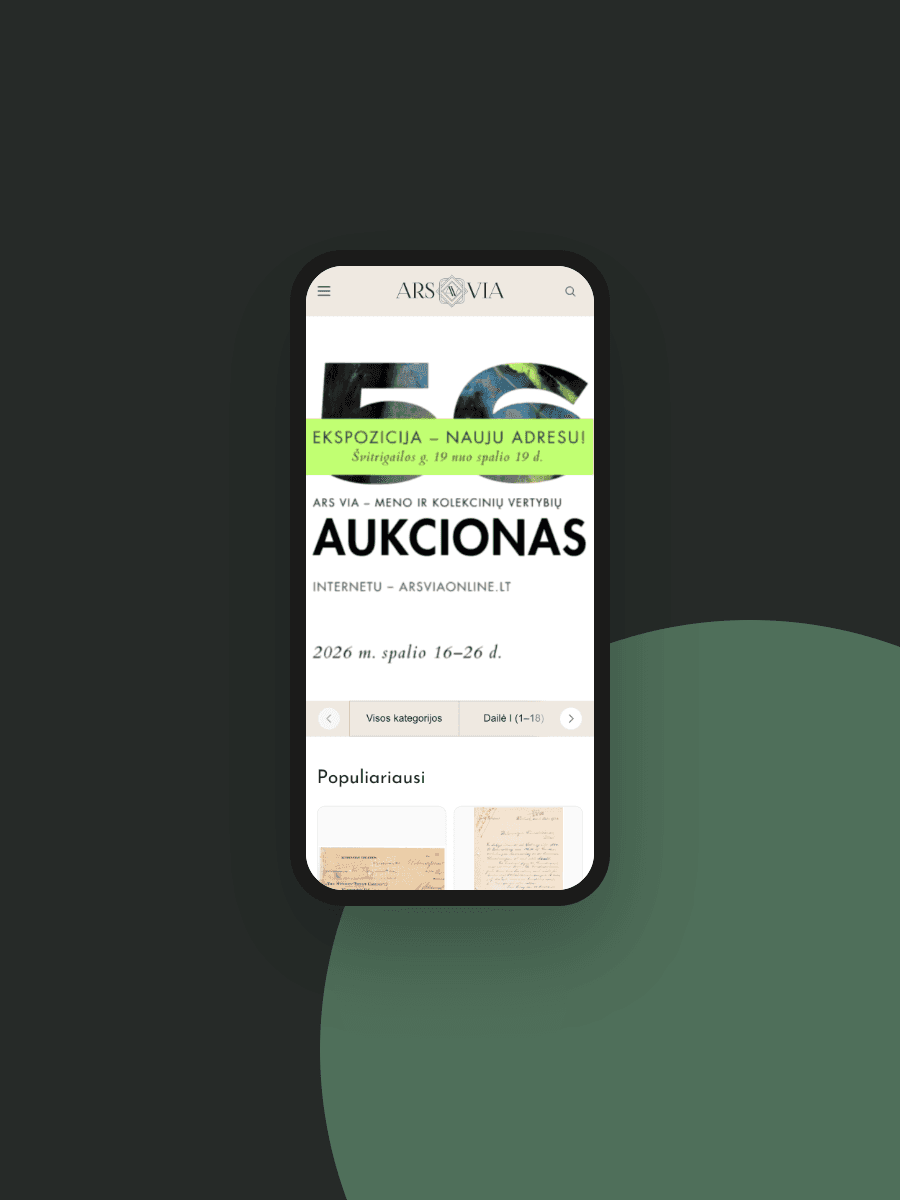
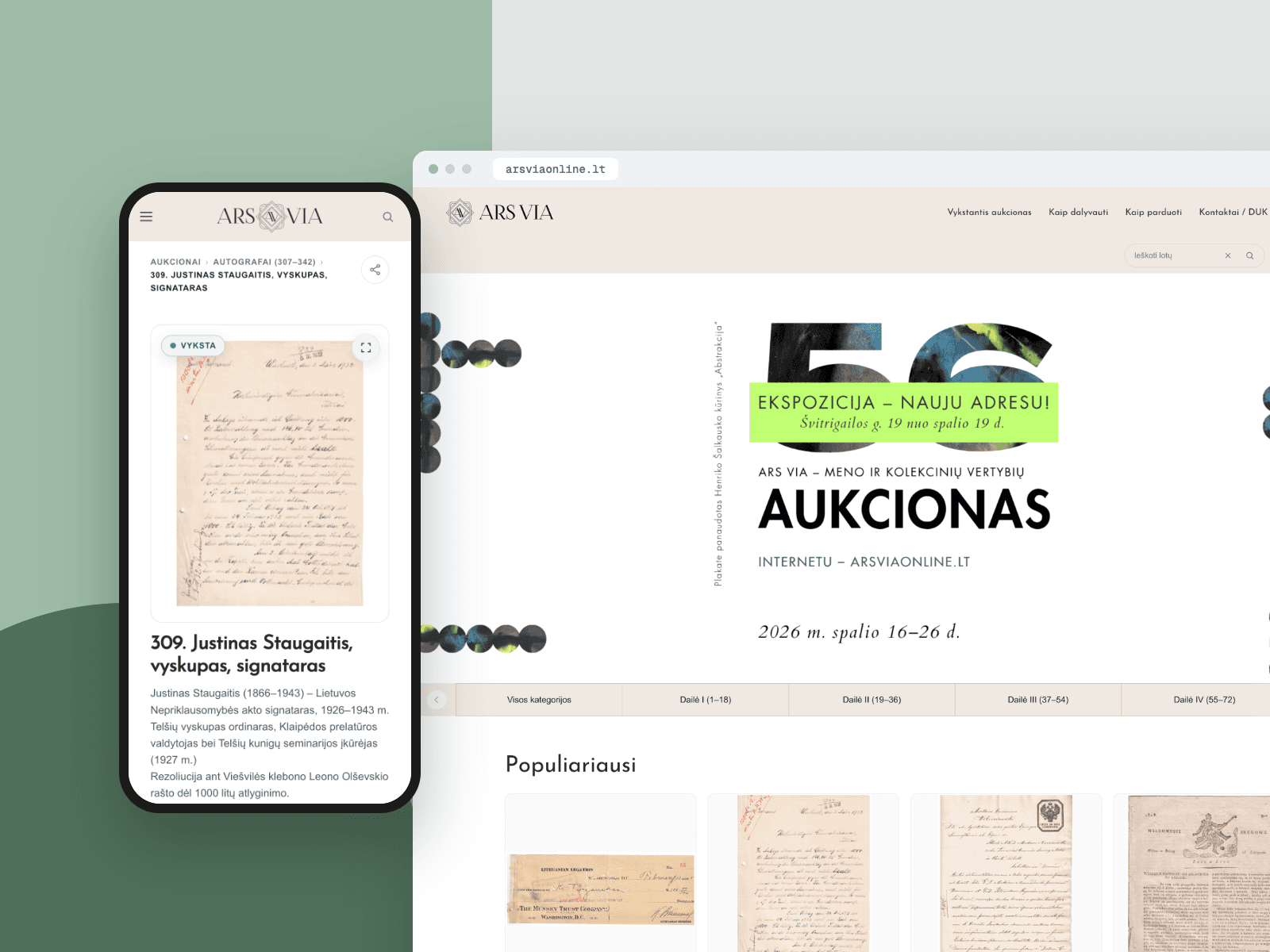
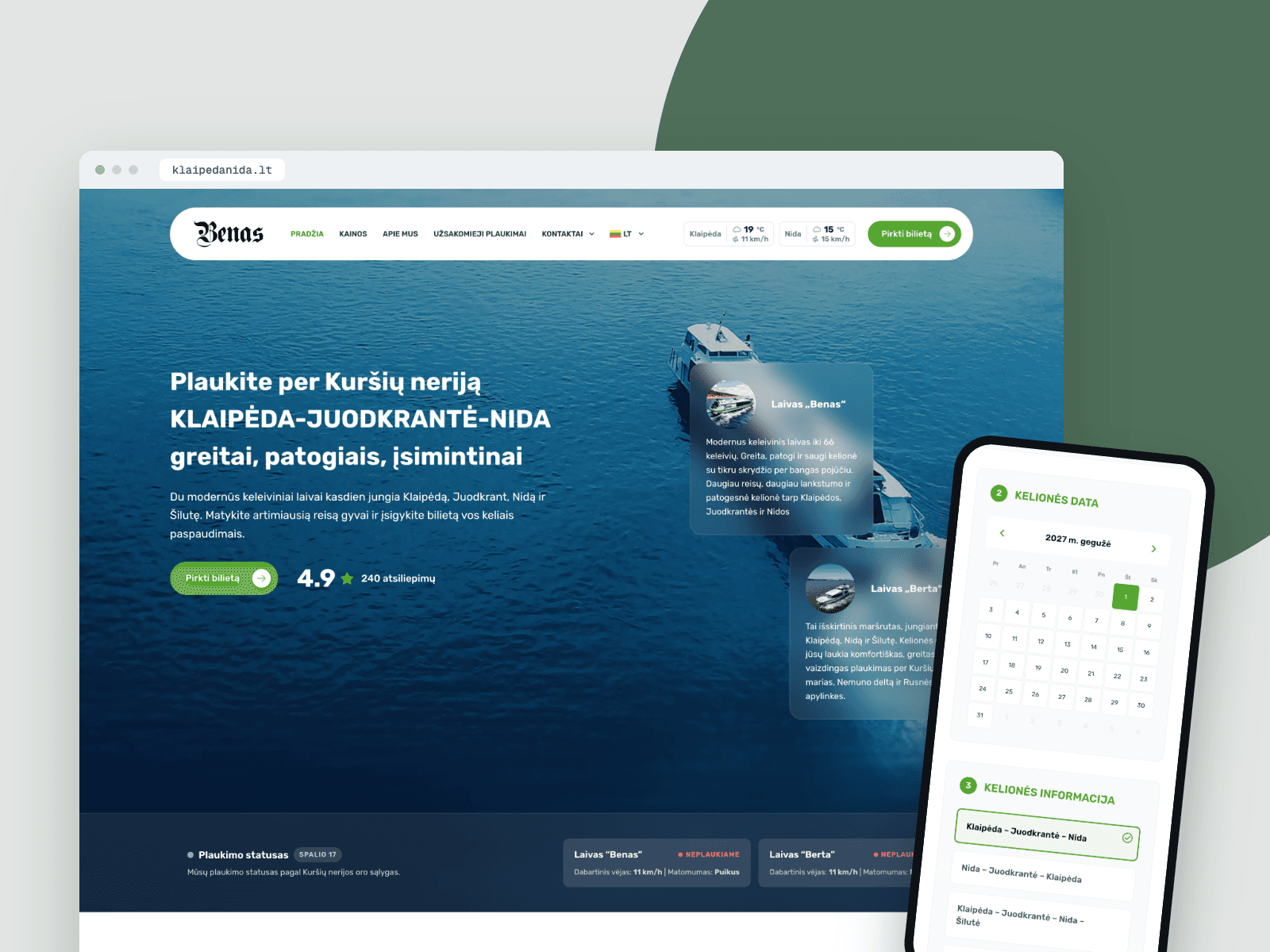
When a standard website or ready-made tool is not enough, we build an application around your business rules. Customers can book, buy tickets, take part in auctions or manage their orders, while your team manages the information behind those actions in one place.
We start with what you need to solve, then choose features based on your workflow and your users’ needs.
01
Booking and ticketing systems
Customers choose a service, date, time and number of participants, see the price and pay online. We can include different rates, extras and booking confirmations, with tools for your team to review and manage reservations.
02
Online auction platforms
Participants browse items, register and place bids. We build account approval, bid increments, auction timing and bid history around the auction rules. Your team gets the tools to manage auctions and their listings.
03
Customer portals
Give customers one place to find their orders, documents and service information. They can check progress, submit requests and find answers without contacting your team about every detail.
04
Internal business applications
When information is spread across spreadsheets and email, it becomes difficult to see what has been done. We can create a shared place for enquiries, responsibilities, progress updates and documents.
05
Custom order forms
If pricing depends on a customer’s choices, a basic message field may not collect enough information. We create forms that guide people through the relevant options and give your team the details needed to respond.
An integration lets two systems exchange information. For example, an approved order can be passed to another program without someone typing it in again. We assess what is possible by reviewing the tools you use and how they make data available.
Customers choose a service, date, time and number of participants, see the price and pay online. We can include different rates, extras and booking confirmations, with tools for your team to review and manage reservations.
Participants browse items, register and place bids. We build account approval, bid increments, auction timing and bid history around the auction rules. Your team gets the tools to manage auctions and their listings.
Give customers one place to find their orders, documents and service information. They can check progress, submit requests and find answers without contacting your team about every detail.
When information is spread across spreadsheets and email, it becomes difficult to see what has been done. We can create a shared place for enquiries, responsibilities, progress updates and documents.
If pricing depends on a customer’s choices, a basic message field may not collect enough information. We create forms that guide people through the relevant options and give your team the details needed to respond.
(04) PROCESS
How we develop a custom application
STEP 1
Understand the problem
Review how you take orders or deliver the service and where difficulties arise.
STEP 2
Prepare the plan
Describe what customers and staff can do, what information is needed and how the application will behave.
STEP 3
Design and build
Develop the screens and features, sharing working parts for your feedback.
STEP 4
Test real situations
Check ordinary orders, missing information, different account permissions and other important cases.
STEP 5
Launch and hand over
Explain administration and agree on maintenance and later additions.
(03) OUR WORK
Systems we've built
See the solutions we have built and the needs they address – from user actions to day-to-day administration.
The price depends on the complexity of the features, user groups, data and connections to other systems. A simple enquiry tracker and an auction platform have different requirements, even if neither has many pages.
We prepare a proposal after discussing the operating rules and priorities. Larger projects can be delivered in stages: start with the main process, then add features based on how people use the system.
No. Describe how you work now and what you would like to change. A concrete example, from the first enquiry to a completed order, is particularly helpful. We can prepare the feature list together.
Yes. We plan the orders, records and settings your team needs to edit, then build the administration tools for them. Different staff can have different permissions.
Not necessarily. We first assess what can stay and what can connect. If the main requirement is moving data between existing programs, connecting those tools may be enough without building a new system.
Yes. We discuss likely future needs during planning. Later additions are assessed against the current application, the work required and the cost.